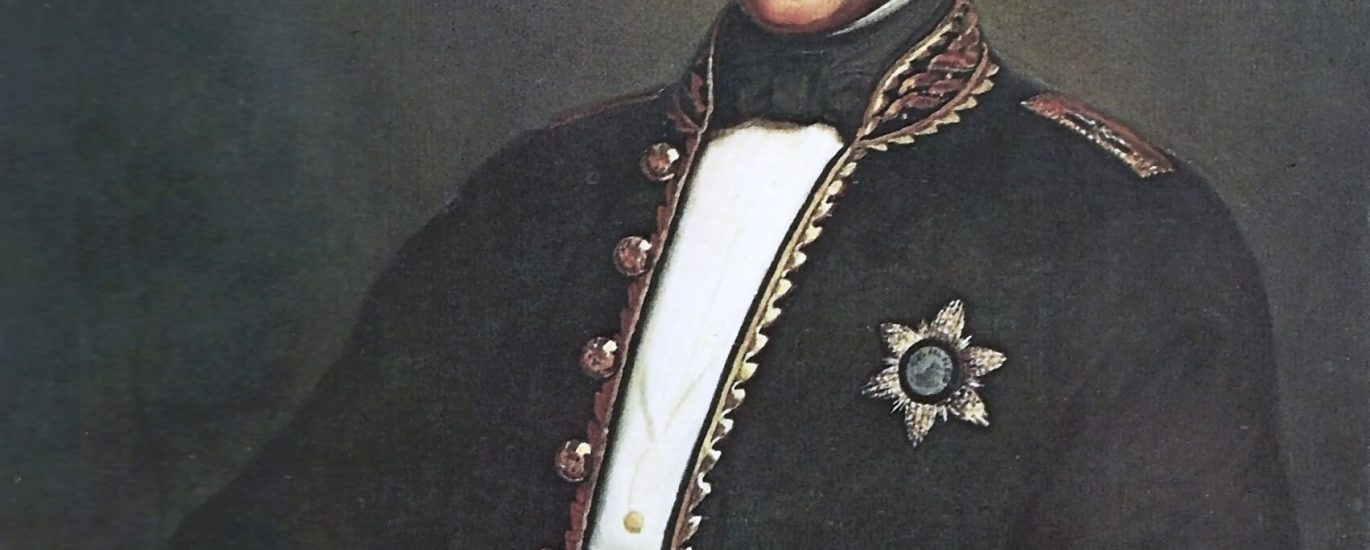
Few figures in Latin American history have inspired as much admiration and controversy as Simón Bolívar. Revered as El Libertador (The Liberator), Bolívar played a decisive role in ending Spanish colonial rule across much of South America. Yet despite his extraordinary achievements, some historians and political critics have questioned whether he ultimately betrayed the democratic ideals of the independence movements he helped lead. Was Bolívar truly a sellout, or is that label an unfair judgment of a leader navigating extraordinary circumstances?
Born in Caracas in 1783, Bolívar devoted much of his life to liberating Spanish colonies from imperial control. His military campaigns were instrumental in securing the independence of present-day Venezuela, Colombia, Ecuador, Peru, Panama, and Bolivia, the latter named in his honor. Inspired by Enlightenment thinkers such as John Locke, Montesquieu, and Jean-Jacques Rousseau, Bolívar initially envisioned independent republics founded on liberty, equality, and self-government.
However, the realities of war and nation-building soon challenged those ideals. Following independence, the newly liberated territories faced economic collapse, regional rivalries, weak institutions, and constant threats from internal rebellions and foreign powers. Bolívar increasingly concluded that strong central authority was necessary to preserve unity and prevent the new republics from descending into chaos.
It is this shift that has led some scholars to accuse Bolívar of abandoning democratic principles. Critics argue that he accumulated excessive executive power, dissolved political assemblies when they opposed him, censored some critics, and proposed constitutions that included lifetime presidencies with the authority to appoint successors. To opponents, these actions appeared inconsistent with the democratic freedoms that independence movements had promised. They contend that Bolívar replaced one form of concentrated authority with another, undermining the representative government many revolutionaries had envisioned.
Some critics also point to Bolívar’s disappointment with electoral politics. In his later years, he expressed frustration with factionalism and warned that unrestricted democracy could produce instability rather than liberty. These views have been interpreted by some as evidence that he abandoned the revolutionary ideals of popular sovereignty.
Yet describing Bolívar as a “sellout” ignores the broader historical context. Unlike leaders who sought personal enrichment or restored colonial rule, Bolívar dedicated his fortune, health, and personal safety to achieving independence. He spent years on military campaigns under extremely difficult conditions, often sacrificing his own comfort and financial security for the cause of liberation. His objective remained the preservation of independence rather than its betrayal.
Supporters argue that Bolívar’s preference for a strong executive reflected political pragmatism rather than dictatorship. Newly independent states lacked stable institutions, experienced administrators, and established democratic traditions. Ethnic divisions, regional loyalties, and economic devastation threatened to undo the gains of independence. Bolívar believed that temporary centralization was essential to prevent civil war and foreign intervention while republican institutions matured.
Modern historians generally reject simplistic labels. Bolívar was neither a flawless democrat nor a tyrant who betrayed his revolution. Instead, he was a complex statesman attempting to balance liberty with political stability in one of history’s most turbulent periods. His legacy contains undeniable contradictions: he liberated millions from colonial domination while advocating constitutional arrangements that concentrated executive authority.
More than 190 years after his death, Bolívar remains one of Latin America’s most influential historical figures. Streets, cities, currencies, and nations continue to bear his name, while political leaders across the ideological spectrum invoke his legacy. The continuing debate over his leadership reflects the enduring challenge of balancing freedom with effective governance.
Ultimately, asking whether Simón Bolívar was a sellout oversimplifies history. He did not abandon the cause of independence for personal gain or foreign interests. Rather, he struggled with the difficult task of transforming revolutionary victories into stable governments. His methods remain open to criticism, but his commitment to ending colonial rule is beyond dispute. Bolívar should therefore be remembered not as a sellout, but as a visionary leader whose achievements and shortcomings continue to shape historical debates throughout Latin America.