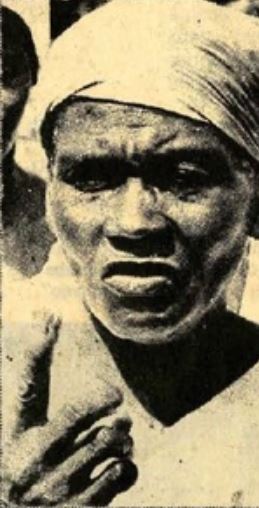
History often remembers presidents, generals and political leaders, but some of its most enduring heroes are ordinary people whose courage changes the course of society. Florinda Soriano Muñoz, widely known as Mamá Tingó, is one such figure. Though she lived as a humble farmer, her determination to defend the rights of rural communities transformed her into one of the Dominican Republic’s most respected symbols of justice and social activism.
Born on November 8, 1921, Mamá Tingó grew up in a rural environment where farming was both a livelihood and a way of life. Like many peasant families, she depended on the land to support her household. Despite receiving little formal education, she developed a strong sense of leadership and became deeply committed to protecting the rights of farmers who faced uncertainty over land ownership.
During the 1960s and early 1970s, land disputes became increasingly common in parts of the Dominican Republic. Many rural families had cultivated land for generations without possessing formal legal titles. As economic development expanded and land values increased, conflicts arose between local farmers and individuals or companies claiming ownership of the same land. These disputes often placed vulnerable farming communities at risk of losing both their homes and their livelihoods.
Mamá Tingó emerged as one of the leading voices advocating for these communities. She became active in the Federation of Christian Agrarian Leagues, an organization that promoted agrarian reform and encouraged farmers to defend their legal and social rights through peaceful means. Her leadership earned her widespread respect among fellow farmers, who viewed her as someone willing to stand up for those with little political or economic power.
Her activism ultimately came at a great personal cost. On November 1, 1974, during a tense land dispute in Yamasá, Mamá Tingó was shot and killed by a man employed by a landowner involved in the conflict. She was 52 years old. Her death generated national outrage and brought renewed attention to the challenges facing rural communities across the Dominican Republic. For many observers, the incident highlighted the unequal power dynamics that often characterized land disputes and underscored the need for stronger legal protections for small-scale farmers.